
Deck Repair That Starts With an Honest Assessment
Majestic repairs decks across Austin and Hays County, from board and railing replacement to structural framing and ledger repairs. We assess the existing structure first, then quote only what the deck needs. Fully insured, 1,000+ projects since 2016.
A deck that’s gone soft underfoot, lost boards to rot, or developed a wobble at the railing doesn’t always need a full rebuild. We repair decks throughout Austin and Hays County, and the first step is always an honest structural assessment to determine whether a repair or replacement is the right call. We’ve worked on decks built by dozens of other contractors since 2016, and we’ll tell you straight what your deck needs. Our crew is fully insured for repair work on existing structures.
Most deck repairs fall into one of a few categories. Surface board replacement handles cupped, cracked, or rotted decking without touching the frame underneath. Railing repairs address loose posts, wobbly balusters, and code-compliance gaps that fail inspection. Structural repairs go deeper, dealing with the joists, beams, posts, and the ledger board that ties the deck to the house. Schedule a repair assessment to find out which category your deck falls into.
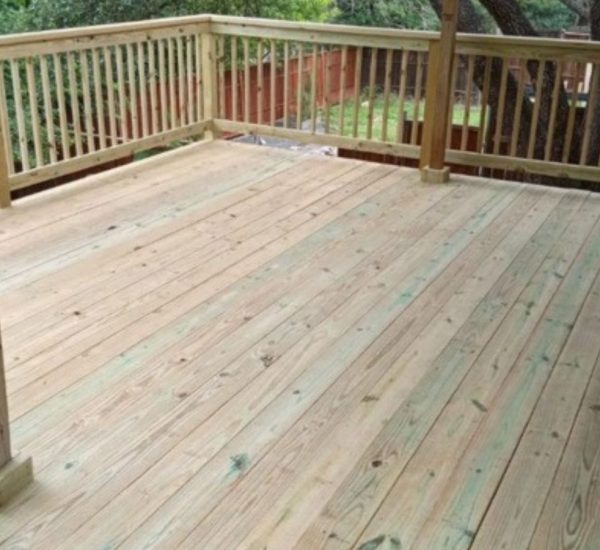
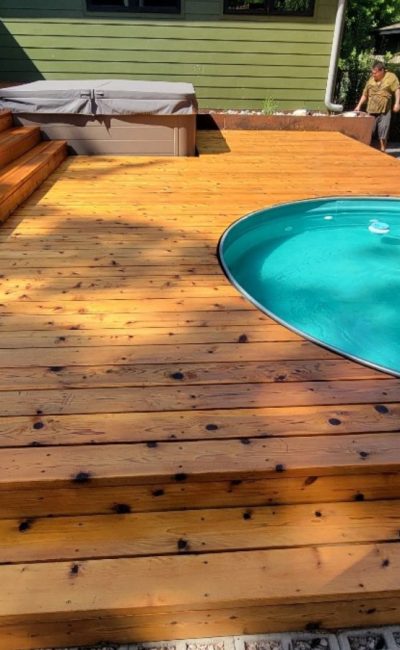
Types of Deck Repair We Handle
The ledger board is where we find the most serious problems. It’s the board that bolts the deck to the house, and when it’s improperly flashed or under-fastened, water gets behind it and rots both the ledger and the house rim joist. A failing ledger is the leading cause of deck collapses nationwide. A thorough deck inspection starts with the ledger connection; if yours is compromised, that repair takes priority over cosmetic work.
Surface-level repairs are the most common request we get. Cedar and pressure-treated boards cup, split, and rot over a 10 to 20-year span, especially on the high-exposure southern and western sides of a deck. We can replace individual boards or the entire surface while keeping the structural frame, at a cost far lower than a complete rebuild. When more than 40 percent of the surface boards have failed, we’ll usually recommend a full deck replacement instead, because the labor to replace boards piecemeal starts to approach the cost of a rebuild.
Railing and stair repairs come up constantly because they take the most physical abuse, and they’re the biggest safety risk. Loose railing posts, rotted stair stringers, and balusters spaced too wide for the current code all show up in our repair assessments. We bring railings up to the current 36-inch residential height standard and the 4-inch maximum baluster gap when we repair them, so the repaired section passes inspection. Refinishing the repaired boards with a fresh deck staining service ties the new work into the existing surface.
Structural framing repairs address the parts you don’t see. Joists that have rotted at the ledger, beams that have checked and split, posts that have settled or rotted at the base, and footings that have heaved. We add sister joists alongside damaged ones, replace failed beams, and reset posts on proper footings. If the framing damage is widespread, we’ll walk you through why a new build might cost less over the life of the deck than chasing repairs.
Fastener and hardware upgrades are a quiet but important part of repair work. Older Austin decks were often built with under-spec nails and uncoated hardware that corrodes in our humidity. We upgrade to structural screws, hot-dipped galvanized or stainless connectors, and proper joist hangers during any structural repair. The build standards cover the hardware standards we hold every repair to.
We repair both wood and composite decks. Wood repairs are more common because the material weathers, but composite decks develop problems too: surface scratching, color fade on early-generation uncapped boards, and structural issues in the wood frame underneath the composite surface. A worn cedar deck surface, for instance, often sits on a frame that’s still sound, so the repair is all surface and no structure.
Repair is one piece of keeping a deck sound over time. Ongoing deck maintenance, including seasonal inspection and refinishing, catches small problems before they become structural ones. We can set up a maintenance cadence after a repair, so the deck doesn’t drift back into disrepair.
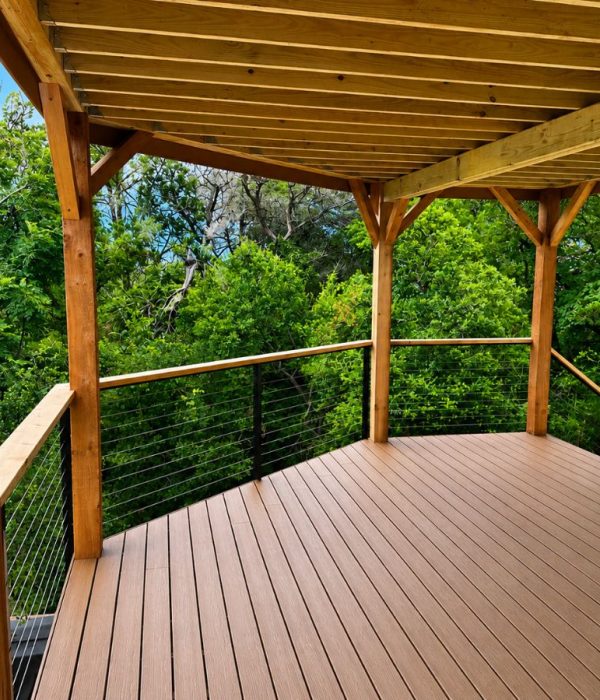
Deck Repair Across the Austin Metro
We service the full Austin metro and Hays County for repair work, including South Austin and Buda. Repair assessments in the core service areas are scheduled within 5 to 10 days.
Homeowners in Kyle and the surrounding Hays County markets get the same 45-to-60-minute assessment that covers the full structure, not just the area you’re worried about, because deck problems are often connected.
The repair quote itemizes each repair separately, so you can decide what to do now and what to wait on. We don’t bundle a cosmetic board swap with urgent structural work to inflate the ticket. If the ledger needs immediate attention, but the railing can wait a season, we’ll tell you that and quote them as separate line items. Most repair projects are completed in 2 to 5 days once scheduled, faster than a full build because the structure is already in place.
If the assessment shows the deck is past economical repair, we’ll be direct about it. A 25-year-old deck with a failing ledger, rotted joists, and cupped surface boards is usually a replacement candidate rather than a repair project. We’d rather lose the repair job than take your money on a deck that’s going to keep failing. Honest assessment is the whole point of the first visit.
Frequently Asked Questions
How do you decide whether a deck needs repair or full replacement?
The assessment first looks at the structural frame: ledger connection, joists, beams, posts, and footings. If the frame is sound and the problems are surface-level (boards, railings), repair makes sense. When more than 40 percent of surface boards have failed, or the framing has widespread rot, or the ledger and multiple structural members are compromised, replacement usually costs less over the life of the deck. We give you the reasoning, not just the verdict.
Why is the ledger board such a priority in deck repair?
The ledger board bolts the deck to the house, and a failing ledger is the leading cause of deck collapses nationwide. When it’s improperly flashed or under-fastened, water gets behind it and rots both the ledger and the house rim joist. We inspect the ledger connection on every repair assessment. If yours is compromised, that repair takes priority over cosmetic work because it’s a safety issue, not an appearance issue.
Can you repair just a few boards instead of the whole deck?
Yes. Surface board replacement is our most common repair. We replace individual cupped, cracked, or rotted boards while keeping the structural frame, which costs far less than a rebuild. This works well until roughly 40 percent of the surface has failed, at which point the labor to replace boards piecemeal starts to approach the full replacement cost, and we’ll walk you through that math honestly.
Do you repair composite decks, or only wood decks?
We repair both. Wood repairs are more common because wood weathers faster, but composite decks develop problems too: surface scratching, color fading on early, uncapped boards, and structural issues in the underlying wood frame. The composite surface usually outlasts the frame, so a composite deck repair often means structural work below a walking surface that’s still in good shape.
Will repaired railings and stairs pass inspection?
Yes. When we repair railings and stairs, we bring them up to current code: 36-inch residential railing height and a 4-inch maximum baluster gap. Older Austin decks often have railings that were code-compliant when built but no longer meet current code standards. The repaired section passes inspection because we repaired it to the current requirement, not the original spec.
How fast can you complete a deck repair in Austin?
Repair assessments in the core Austin and Hays County service area are scheduled within 5 to 10 days. Once scheduled, most repair projects are completed in 2 to 5 days because the structure is already in place, faster than a full build. Urgent structural repairs (such as a failing ledger) can often be prioritized. The assessment takes 45 to 60 minutes and covers the full structure.
What hardware do you use for structural deck repairs?
We upgrade to structural screws, hot-dip galvanized or stainless-steel connectors, and proper joist hangers during any structural repair. Older Austin decks were often built with under-spec nails and uncoated hardware that corrodes in the local humidity. Upgrading the hardware during repair extends the life of the repaired structure and prevents the same corrosion failure from recurring.