
Cedar Deck Installation for Austin and Hays County
Majestic installs cedar decks across Austin, Buda, Kyle, Driftwood, and Hays County. Premium cedar species, hidden fastener systems, and flashing detail sized to Hays County sun and moisture cycling. Pressure-treated and redwood are also available. Fully insured, 1,000+ projects since 2016.
Cedar is the right call when the homeowner wants a wood deck done right. Western Red Cedar resists rot and insects better than pressure-treated pine, ages to a silver patina that doesn’t require sealing, and works at lower tiers on multi-level builds where proven durability across Buda, Kyle, Driftwood, and South Austin since 2016. We’ll show you cedar samples from completed builds at the consultation to reinforce trust.
Not every deck should be cedar. Upper tiers on multi-level builds, pool deck surrounds, and high-traffic surfaces all perform better in capped composite. Cedar’s strength is the look and feel of wood in lower-exposure zones: middle and lower tiers, shaded backyard decks, and aesthetically driven custom designs where a mixed-material approach makes sense. We won’t recommend cedar where capped composite handles the exposure better.
At the site walk, we bring physical cedar samples (sapwood, heartwood, and clear grades) and discuss the maintenance trade-offs compared to composite. We’ll measure where the deck will sit relative to sun exposure and moisture cycling. Schedule a site walk to see actual cedar samples from completed Majestic builds and feel confident in your choice.
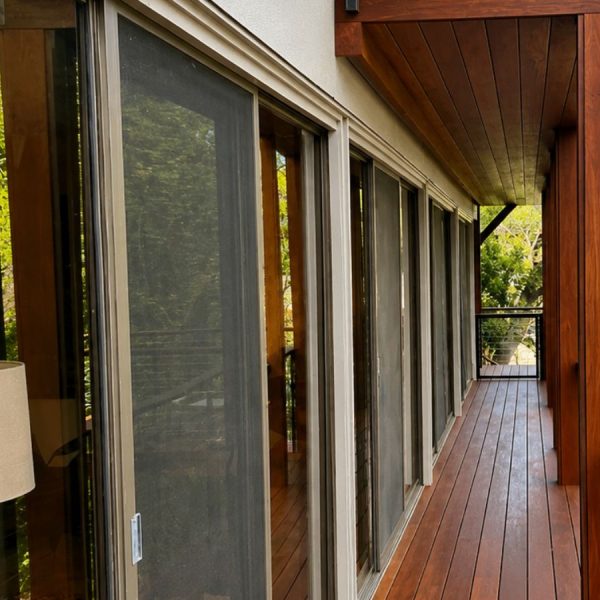
Cedar Deck Patterns We Install
Four cedar deck patterns cover most of the Austin and Hays County market. Each starts with the cedar grade and species selection, the fastener strategy, and the flashing detail that protects the deck from moisture intrusion at the framing connections. That’s a deliberate sequence we follow on every cedar build.
New Cedar Deck Construction
New cedar deck construction, part of our new deck installation process, uses Western Red Cedar (the regional standard for Central Texas) in heartwood or clear grade, depending on budget. Clear grade offers a tighter, more uniform appearance without knots, inspiring pride in your deck’s natural beauty. Hidden fastener systems prevent surface marring and allow the cedar to age gracefully, enhancing the deck’s aesthetic appeal. We’ll help you choose the right grade during the site walk.
Cedar in Tier-Optimized Multi-Level Builds
Cedar in tier-optimized multi-level builds sits at the middle and lower tiers, where sun and weather exposure are lower than in the upper tier. Capped composite handles the high-exposure upper tier; cedar handles the shaded lower zones where wood’s natural appearance and feel work well. Tier-optimized material selection typically saves 20 to 30 percent compared with an all-composite build while protecting high-exposure surfaces. It’s the most common pattern we build on Hays County multi-level projects.
Cedar Deck Repair and Resurfacing
Cedar deck repair and resurfacing handles aging cedar decks that have lost surface integrity but retain solid framing. Surface board replacement in fresh cedar (matching the original grade), new hidden fastener installation, and flashing detail repair at the house connection. We’ve handled this pattern on cedar decks installed in the early 2010s, where the framing remains solid, but the original surface and railing have weathered past repair. Past cedar refurbishments cover similar projects across Hays County.
Mixed-Material Cedar Designs
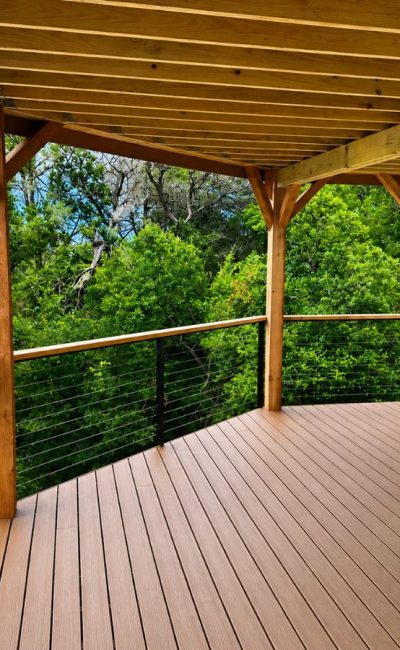
Mixed-material cedar designs combine cedar with other materials where the design intent calls for it. Cedar surface with metal cable railing, cedar deck with stone patio transition, cedar inserts in a primarily composite deck for accent zones. Trex Pro composite often pairs with cedar in mixed-material designs, and the structural details are walked through during the site walk.
Why Majestic for Cedar Installation
Western Red Cedar Species Selection
Western Red Cedar is the species we’ve installed for Central Texas conditions since 2016. It’s the regional standard because its dimensional stability holds up under Hays County sun and humidity swings better than other cedar species (Eastern White Cedar, Alaska Yellow Cedar). We’ve sourced cedar from the same supplier since 2018, so the consistency stays predictable. We can source other species when the design calls for it, but Western Red is the default recommendation for cost, availability, and performance. Whichever species we install, the refinishing cadence sized for Texas exposure is what determines the deck’s long-term life.
Hidden Fastener Systems Standard
Hidden fastener systems are standard on our cedar deck installations. They prevent the rust-streak fastener pattern that develops over time on face-screwed cedar, and they allow the wood to expand and contract with humidity cycles without splitting along the screw line. The fastener investment is slightly higher than that of a face-screwed installation, but the long-term surface appearance is materially better. We don’t install face-screwed cedar unless the homeowner specifically requests it.
Flashing Detail at the House Connection
Flashing detail at the deck-to-house connection is where cedar decks fail most often. We use copper or stainless flashing at the ledger board, full sealant detail at the siding penetration, and drainage planes that route water away from the framing. We’ve replaced more cedar decks due to flashing failure than for any other cause. Most of the cedar repair work we do involves flashing that was installed poorly or not at all on builds from 5 to 15 years ago.
Maintenance Path Decisions at the Site Walk
Maintenance expectations for cedar are different from those for composite. Cedar ages to a silver patina without sealing if the homeowner accepts the color shift. Sealing every 2 to 3 years preserves the warm cedar tone but requires a maintenance commitment. We’ll walk through both paths at the site walk so the permit and material decisions are made with the maintenance trade-off in mind.
Cedar Deck Service Area
Cedar deck installations are concentrated across Buda and Kyle, where Hays County homeowners often choose cedar at lower tiers on multi-level builds or as the primary material on shaded backyard decks. Plum Creek and Vista Oaks see most cedar work paired with composite upper tiers. That’s the most common cedar pattern in Hays County.
Driftwood and Wimberley lean toward all-cedar builds on acreage where the Hill Country aesthetic matches the wood’s natural appearance. The shaded lots common to this corridor extend cedar’s service life noticeably compared to full-sun installations. You’ll see this most often on Driftwood acreage builds.
Manchaca and the South Austin corridor cover the Hays-adjacent market. Cedar repair and resurfacing is common here because pools and decks installed in the 1990s and 2000s often used cedar, and the framing-still-solid scenario shows up frequently in this older housing stock. We’ve handled dozens of these refurbishments since 2016.
For the broader Austin metro (Round Rock, Cedar Park, Georgetown, Pflugerville, Leander), cedar work shifts toward flat-lot installations where the entire deck is cedar: less tier optimization, more aesthetically driven cedar choices on backyard entertaining decks.
Hays County HOAs (Plum Creek, Whispering Hollow, Sunset Hills) accept cedar as a standard wood material option in architectural submittals. We include cedar grade specifications and finish options in the submittal package so the committee review doesn’t stall due to material questions.
Frequently Asked Questions
What cedar species do you install?
Western Red Cedar is our standard for Central Texas conditions. Its dimensional stability holds up under Hays County sun and humidity swings better than Eastern White or Alaska Yellow Cedar. We can source other species when the design calls for them, but Western Red is the default due to cost, availability, and long-term performance. We don’t source cedar from outside suppliers unless requested.
How long does a cedar deck last in Hays County conditions?
Western Red Cedar installed with hidden fasteners and proper flashing typically lasts 20 to 25 years with periodic sealing, or 15 to 20 years if allowed to age naturally to silver patina. Cedar in shaded locations extends those ranges. Pressure-treated lower-tier framing under cedar surface boards lasts 25 to 30 years. Composite outlasts cedar but doesn’t match the wood’s appearance.
Should I seal my cedar deck?
Sealing every 2 to 3 years preserves the warm cedar tone and noticeably extends service life. Skipping sealing lets cedar develop a silver patina, which is a finished look in its own right and requires no maintenance. Both paths are valid; the choice depends on which appearance the homeowner prefers and whether the maintenance schedule fits the household.
Can cedar work on a pool deck?
We don’t recommend cedar at pool-adjacent tiers. Chlorine and salt exposure degrade wood faster than capped composite, and the constant splash cycling shortens cedar’s service life around water. Cedar can work at upper or lower tiers on a multi-level pool deck where exposure to pool chemistry is limited, but the pool-edge surface should be composite or stone.
Do you do cedar deck repair or resurfacing?
Yes. Aging cedar decks with solid framing can be resurfaced with fresh cedar, with new hidden-fastener installation and flashing repair at the house connection. Common scenario: cedar deck installed 10 to 15 years ago, framing solid, surface and railing weathered past repair. We assess framing during the site walk and provide quotes for both resurfacing and full rebuild options.
What does the cedar deck installation process look like?
Five phases. Site walk and cedar grade selection (week 1). Design and material specifications, including hidden-fastener and flashing details (weeks 2 to 3). HOA submittal and permit coordination (weeks 3-6). Build from framing through final railing (weeks 6 to 9). Final inspection and walk-through (week 9 to 10). Contact us to start with the site walk.