
Rooftop Deck Installation Engineered for Flat Roofs
Majestic installs rooftop decks across the Austin metro. Engineered load assessment, roof-membrane protection, and pedestal-paver or framed systems built to preserve waterproofing. Common on flat-roof modern homes and additions. Fully insured, 1,000+ projects since 2016.
A rooftop deck turns unused roof space into the best seat in the house, with views most ground-level decks can’t touch. It’s also the most technically demanding deck we buildundernea because it sits on top of a waterproofing system that can’t be compromised and a structure that must be verified to carry the load. We install rooftop decks across the Austin metro, and every project starts with the two questions that matter most: can the structure carry it, and how do we protect the roof underneath? Our rooftop crew is fully insured for rooftop work.
Rooftop decks have become common on the flat-roof modern homes going up across central Austin and the close-in neighborhoods, and on additions where a flat roof over a garage or lower wing becomes a terrace. The appeal is obvious: downtown skyline views, Hill Country sunsets, and outdoor space on a lot too tight for a ground-level deck. The engineering behind that appeal is what separates a rooftop deck that lasts from one that leaks. Schedule a rooftop assessment, and we’ll start with the structural and waterproofing questions.
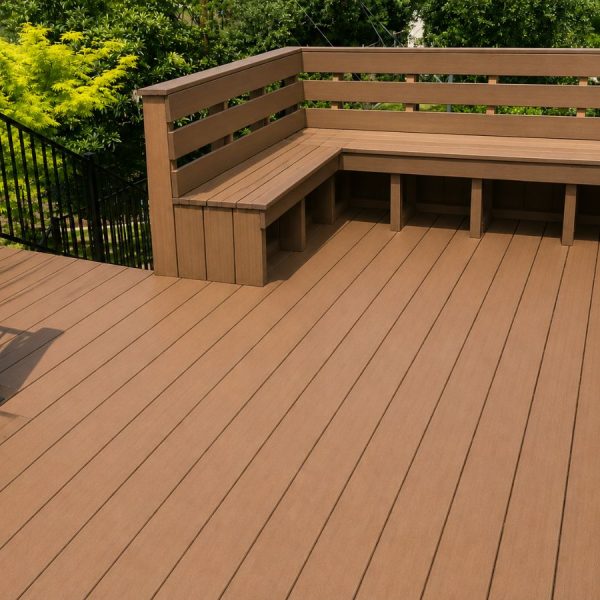
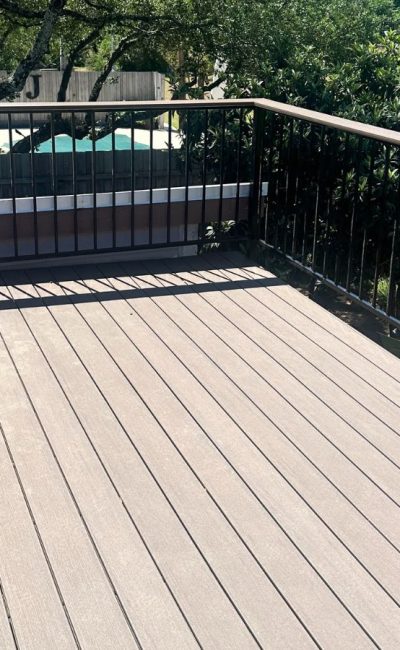
How We Build Rooftop Decks
Load assessment comes first, always. A roof designed to keep weather out isn’t automatically rated to carry people, furniture, planters, and the deck system itself. We assess the existing roof structure and, where needed, bring in a structural engineer to verify or specify reinforcement. Unlike a standard deck installation on solid ground, we won’t build a rooftop deck on a structure that hasn’t been confirmed to carry the load, because that’s a safety question with no acceptable shortcut. This is the step that some contractors skip, and homeowners never see, right up until the ceiling below starts to sag.
Protecting the roof membrane is the second non-negotiable. The waterproofing layer under the deck is what keeps the building dry, and the deck system has to sit on it without penetrating it wherever possible. Our preferred approach uses an adjustable pedestal-paver system that floats above the membrane on supports, distributing load through the waterproofing without fasteners. The pavers lift out for membrane inspection and repair, so the roof stays serviceable under the finished deck. Where a framed system is required, we use protection layers and flashing details to keep the membrane intact.
The pedestal-paver system is our most-installed rooftop approach for good reason. The adjustable pedestals level the deck surface over a sloped roof, which every flat roof actually is, since roofs are pitched slightly for drainage. The pavers, whether porcelain, composite, or stone, sit on the pedestals with consistent gaps for drainage, and water passes through to the membrane and drains normally underneath. Nothing penetrates the roof, and the whole system is reversible. For a composite-board surface look on a rooftop, composite pavers on pedestals deliver it without the framing penetrations a traditional composite deck would require.
Drainage is the detail that makes or breaks a rooftop deck. The roof’s existing drainage has to keep working under the deck, so we design the system to preserve flow to the roof drains and scuppers rather than damming water behind the deck structure. Standing water is the enemy of any roof, and a poorly designed rooftop deck creates exactly that. That’s the failure mode we design against first. We map the drainage before designing the deck layout, and ongoing deck upkeep keeps those drainage paths clear throughout the life of the roof.
Railings and access on a rooftop deck are subject to stricter requirements than ground-level work. Guardrails at roof edges have to meet height and load requirements with an attachment that, again, can’t compromise the membrane or the parapet waterproofing. Access from the interior or via an exterior stair must meet code requirements. We handle custom design work that integrates railings, access, and any shade structures into a rooftop layout that’s both safe and intentional.
Permitting for rooftop decks is more involved than for ground-level decks. The City of Austin reviews the structural engineering, the guardrail details, and the means of access, and the review takes longer than a standard deck permit. Our permit partners handle the filing, and we build the engineered documentation into the submittal, so the review has what it needs. Our build sequencing covers how we sequence engineering, permitting, and construction on rooftop projects.
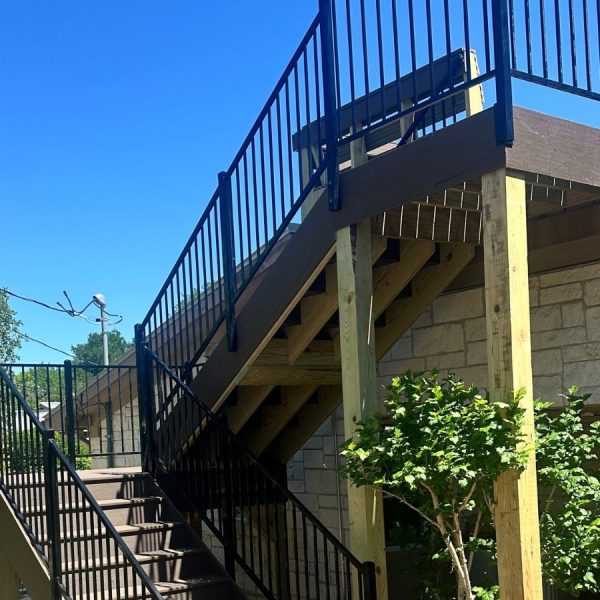
Rooftop Deck Installation Across the Austin Metro
We install rooftop decks primarily in central Austin neighborhoods where flat-roof modern homes are concentrated, and we serve adjacent areas,, including South Austin,, where contemporary infill construction has brought more flat roofs and rooftop-deck demand to older neighborhoods.
For homeowners in the broader metro, including Buda and the Hays County markets, rooftop decks are rarer because the housing skews toward pitched roofs, but flat-roof modern builds do appear, and we assess them the same way.
The rooftop deck timeline is longer than a ground-level build because of upfront engineering and permit review. Assessment and engineering take 2 to 4 weeks; permit review adds 4 to 8 weeks due to the City of Austin’s structural review; and construction runs 1 to 3 weeks,, depending on the system and size. We give you a realistic timeline at the assessment, because a rooftop deck rushed through engineering or waterproofing is a deck that leaks, and a leak on a rooftop deck damages the building, not just the deck.
Frequently Asked Questions
Can my roof support a rooftop deck?
That’s the first question we answer, and it requires assessment rather than assumption. A roof designed to keep the weather out isn’t automatically rated to carry people, furniture, and the deck system. We assess the existing structure and bring in a structural engineer to verify or specify reinforcement where needed. We won’t build on a structure that hasn’t been confirmed to carry the load, because there’s no acceptable shortcut on a safety question like this.
How do you keep a rooftop deck from leaking?
We protect the waterproofing membrane by floating the deck above it rather than penetrating it. Our preferred pedestal-paver system sits on adjustable supports that distribute load through the membrane without fasteners, and the pavers lift out for roof inspection and repair. Where a framed system is required, we use protection layers and flashing that keep the membrane intact. Drainage is designed to preserve flow to the existing roof drains.
What is a pedestal-paver rooftop deck system?
It’s a deck system where pavers, whether porcelain, composite, or stone, sit on adjustable pedestals that float above the roof membrane. The pedestals level the surface over the roof’s drainage slope, and water passes through gaps between pavers to drain normally beneath the surface. Nothing penetrates the roof, the system is fully reversible, and pavers lift out for membrane access. It’s our most-installed rooftop approach because it protects the roof.
Why does a rooftop deck cost more than a ground-level deck?
The added cost reflects engineering and waterproofing work that ground-level decks don’t require: structural load verification (often by an engineer), roof membrane protection systems, drainage design, and stricter guardrail and access requirements. Permitting is also more involved because the City of Austin reviews structural engineering and access details. The result is a deck that protects the building underneath it, which is where the value is.
How long does a rooftop deck installation take in Austin?
Longer than a ground-level build because of the engineering and permit review. Assessment and engineering take 2 to 4 weeks; permit review adds 4 to 8 weeks due to the City of Austin’s structural review; and construction takes 1 to 3 weeks,, depending on the system and size. We give a realistic timeline at the assessment, because a rooftop deck rushed through engineering or waterproofing is a deck that leaks.
Do you install rooftop decks outside central Austin?
Yes, though demand is concentrated in central Austin, where flat-roof modern homes cluster. We serve adjacent areas,, including South Austin, where contemporary infill has introduced flat roofs to older neighborhoods. In the broader metro and Hays County markets, rooftop decks are rarer because housing skews toward pitched roofs, but flat-roofed modern builds do appear, and we assess them using the same structural and waterproofing approach.