
Deck Staining and Sealing for Cedar and Wood Decks
Majestic stains and seals wood decks across Austin and Hays County. We strip the old finish, sand the surface, and apply a penetrating stain rated for Texas sun and humidity. Best done every 2 to 4 years on cedar. Fully insured, 1,000+ projects since 2016.
A wood deck that’s gone gray, blotchy, or rough underfoot usually doesn’t need replacing. It needs to be stripped, sanded, and resealed. We stain and seal wood decks across Austin and Hays County, and when done on the right cadence, refinishing keeps a cedar deck looking new and structurally protected for decades. The Texas sun is brutal on wood finishes, so staining isn’t a one-time job. It’s maintenance. Our refinishing crew handles the refinishing of decks we built and those built by others.
Staining does two things at once. It restores the color and grain that ultraviolet exposure bleaches from cedar and other woods, and it seals the surface against moisture cycling that causes cupping, splitting, and rot. A deck that looks tired is also a deck that’s losing its protection, so the cosmetic problem and the structural problem show up together. Schedule a staining assessment, and we’ll tell you what the surface needs.
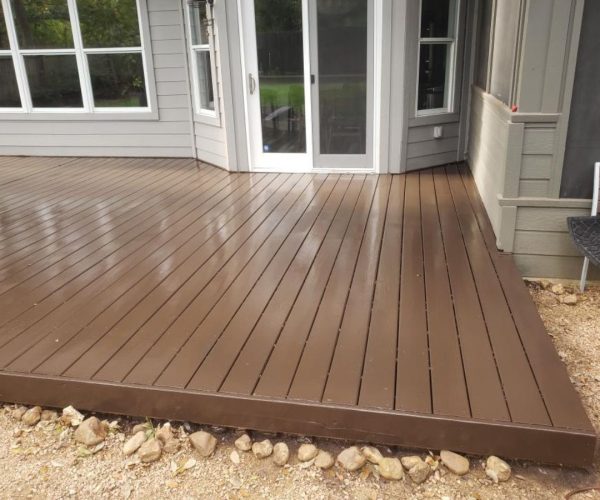
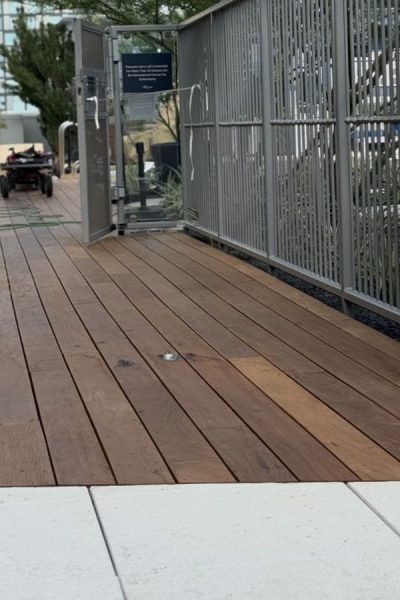
Our Deck Staining Process
The process matters more than the product. We start by stripping the old finish, because a fresh coat over a failing one peels within a season. Stripping removes the degraded finish, mill glaze, and any mildew or algae that’s taken hold in the shaded sections. Then we sand the surface to open the grain so the new stain penetrates rather than sits on top. Skipping the sanding step is the most common reason a refinish fails early.
Stain selection depends on the wood and the exposure. For cedar decks, we use penetrating oil-based or hybrid stains that soak into the grain rather than forming a surface film. Film-forming finishes look great for a year, then peel and require full stripping again. Penetrating stains wear gradually and reapply cleanly, which is why they’re the right choice for the Texas climate. We match the tone you want, from clear sealers that show the natural grain to semi-transparent and solid-color stains.
The southern and western faces of any Austin deck take the hardest ultraviolet beating, and they always fade first. We sometimes recommend a heavier application for those exposures, or a slightly more pigmented stain, because pigment blocks ultraviolet degradation. The shaded north and east sections hold their finish longer but are more prone to mildew, so the prep work differs by exposure, even on the same deck.
Timing is everything with staining. Cedar decks in the Austin climate need refinishing every 2 to 4 years, depending on exposure and the previous finish. Wait too long, and the wood degrades to the point where staining alone won’t restore it, and you’re into board replacement or structural repair territory. A periodic structural check flags that degradation before it gets that far. Stay on cadence, and the same deck keeps its finish and its structure for decades. We can set up a refinishing schedule so it doesn’t slip.
Composite decks don’t get stained, and we’ll tell you that honestly rather than sell you a service you don’t need. If you have a composite surface, the boards are sealed at the factory, and refinishing isn’t part of their maintenance. Composite needs cleaning, not staining. The only decks that benefit from our staining service are wood: cedar, pressure-treated pine, redwood, and hardwoods like ipe.
New cedar decks need their first finish, too, and the timing is specific. We let the new cedar weather for a few weeks, so the mill glaze breaks down, and the wood accepts stain, then we apply the first coat. Staining too early traps mill glaze under the finish and causes early peeling. If we build your cedar deck, the first staining is scheduled into the build timeline to ensure it happens at the right time.
Deck staining is one piece of a broader deck maintenance plan. Paired with seasonal cleaning and periodic inspection, refinishing on cadence is what separates a deck that lasts 30 years from one that fails in 12. We can fold staining into a broader maintenance plan, so the whole deck gets attention, not just the surface color.
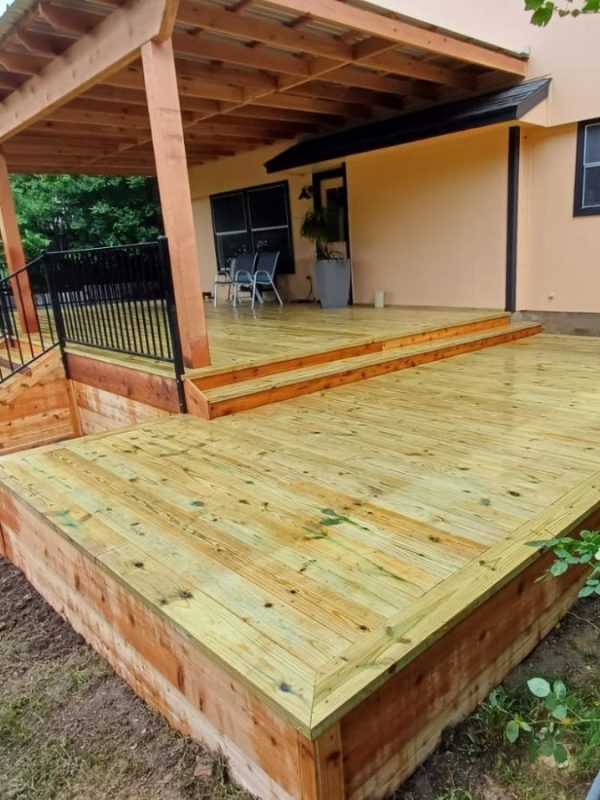
Deck Staining Across the Austin Metro
We stain decks throughout the Austin metro and Hays County, including South Austin and Buda, where mature cedar decks are common, and demand for refinishing is steady.
Homeowners in Driftwood and the Hill Country acreage markets often have large cedar decks that benefit most from staying on a refinishing cadence, since the wood-forward aesthetic depends on the finish looking right.
The staining quote covers stripping, sanding, prep, and application, itemized so you can see what the prep work costs versus the stain itself. Most deck staining projects are completed in 2 to 4 days, depending on the size and the extent of stripping the old finish requires. Weather drives the schedule, since stain needs dry conditions and moderate temperatures to cure properly, so we plan around the forecast rather than forcing a coat on in the wrong conditions.
Frequently Asked Questions
How often should a cedar deck be stained in Austin?
Cedar decks in the Austin climate need refinishing every 2 to 4 years, depending on exposure and the previous finish. The southern and western faces fade the fastest under ultraviolet exposure and may need attention sooner than shaded sections. Staying on cadence keeps both the finish and the structure sound. Wait too long, and the wood degrades past what staining alone can restore, pushing you into board replacement.
Why do you strip and sand before staining instead of just recoating?
A fresh coat over a failing finish peels within a season. Stripping removes the degraded finish, mill glaze, and any mildew or algae in the shaded sections. Sanding opens the grain so the new stain penetrates rather than sits on top. Skipping the sanding step is the most common reason a refinish fails early, so the prep work matters more than the product.
Can you stain a composite deck?
No, and we’ll tell you that rather than sell a service you don’t need. Composite decking is sealed at the factory, and refinishing isn’t part of its maintenance. Composite needs cleaning, not staining. The only decks that benefit from staining are wood: cedar, pressure-treated pine, redwood, and hardwoods like ipe. If you have composite, we’ll point you toward proper cleaning instead.
What kind of stain do you use on cedar decks?
We use penetrating oil-based or hybrid stains that soak into the grain rather than forming a surface film. Film-forming finishes look great for a year, then peel and require full stripping again. Penetrating stains wear gradually and reapply cleanly, which suits the Texas climate. We match the tone you want, from clear sealers that show natural grain to semi-transparent and solid-color stains, with more pigment where ultraviolet exposure is heaviest.
When should a brand-new cedar deck get its first stain?
New cedar should weather for a few weeks first, so the mill glaze breaks down, and the wood accepts stain. Staining too early traps mill glaze under the finish and causes early peeling. If we built your cedar deck, the first staining is scheduled into the build timeline so it happens at the right moment, usually a few weeks after completion, once the surface is ready to accept the finish.
How long does deck staining take, and what affects the schedule?
Most deck staining projects are completed in 2 to 4 days, depending on the size and the extent of stripping the old finish requires. Weather drives the schedule, since stain needs dry conditions and moderate temperatures to cure properly. We plan around the forecast rather than forcing a coat on in the wrong conditions, because a stain applied to damp wood or in extreme heat won’t bond properly and will fail early.