
Custom Deck Design and Build for Austin and Hays County
Majestic designs and builds custom decks across Austin and Hays County. Every custom build starts with a site walk before any drawings or pricing happen. Material selection follows lot conditions, not template defaults. Multi-level, composite, pool, and cedar all available. Fully insured.
Custom deck design is a process, not a product category. Every Majestic build is technically custom because we don’t carry stock plans. What we mean by ‘custom deck design’ specifically is the process in which the deck doesn’t fit a standard pattern: an unusual lot shape, feature integration (outdoor kitchen, fire pit, pergola, hot tub), or a specific aesthetic the homeowner wants to achieve. We’ll start with a site walk before the drawings are done.
Our three lead services cover most of the work. Multi-level decks handle sloped lots and tier configurations. Composite installation covers the Trex Pro and TimberTech material category. Each lead service has its own page with detailed specs.
Pool deck design addresses the surrounding geometry and composite materials around the water. Custom design is where the project sits outside those lead service patterns. Examples: a wraparound deck integrating with an existing pergola and outdoor kitchen, a hot tub deck with sunken seating, a multi-tier deck with a specific railing pattern the homeowner has in mind.
During the site walk, we measure the lot, discuss how the family will use the space, and review any reference images or design ideas you’ve collected. Drawings happen in weeks 2 to 3. Material samples and the quote follow. We won’t push a template; the design starts with your lot, your use case, and your aesthetic preferences.
What Custom Deck Design Covers
Five categories of custom design cover most projects that fall outside standard lead service patterns. Each starts with the site walk and the use-case conversation, not with a template. That’s a deliberate departure from the typical contractor process where templates drive design.
Unusual Lot Shape Designs
Some lots don’t fit a rectangular deck footprint. Irregular property lines, mature tree preservation, rock outcroppings, or specific view orientations push the deck shape away from the standard. Custom design first measures the actual lot constraints, then designs the deck shape to fit. Common patterns: wraparound designs around mature trees, narrow strips along the back of the house, or polygon shapes that follow property lines.
Feature Integration (Pergola, Kitchen, Fire Pit, Hot Tub)
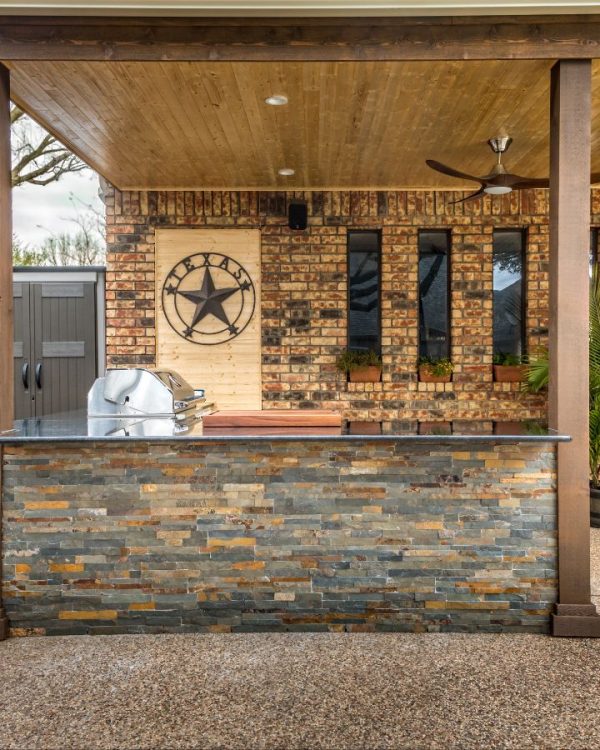
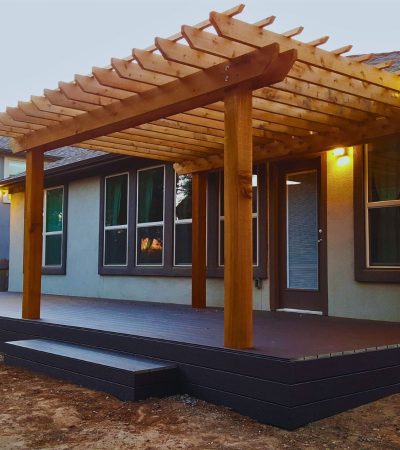
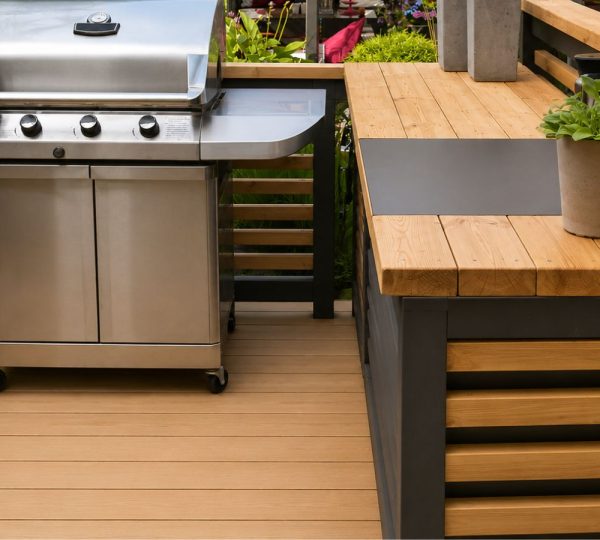
Outdoor living features change deck design. A pergola needs structural attachment or independent footings. An outdoor kitchen needs a load-bearing zone plus gas, water, and electrical runs. A fire pit needs clearance from combustibles. A hot tub needs reinforced framing plus access panels. Each feature changes the deck layout, and we coordinate the integration at the design stage.
Aesthetic-Driven Custom Builds
Some homeowners arrive with a specific look in mind: hidden fasteners, herringbone decking patterns, mixed-material designs, specific railing styles, or design references from architecture magazines. Custom design accommodates the aesthetic intent and walks through what’s achievable. We’re Trex Pro certified installers, so most premium aesthetic options are available through Trex’s product lines. Recent custom builds show how aesthetic intent translates into completed work.
Hot Tub and Spa Deck Integration
Hot tubs and spas require reinforced framing because the load is 400 to 600 pounds per square foot, well above the standard deck load. We design the structural footprint around the spa location, add service access panels, and coordinate plumbing and electrical pathways. Composite or hardwood surface around the spa, with sight lines that don’t crowd the soaking area.
Mixed-Material Designs
Custom builds sometimes combine deck materials with stone, metal, glass railing, or built-in seating. Cedar often appears as the wood material where the homeowner wants a wood accent at lower tiers or shaded areas. The design coordinates how materials transition (from composite to stone patio, from deck to metal pergola post) and how the structural systems support each load.
Why Majestic for Custom Design
Site-First, Template-Free Design
We don’t bring stock plans to the site walk. Every custom design starts at the lot. The grade, the view orientation, the tree preservation, and the way the family uses the backyard all drive the design before material selection or pricing. The site walk is the starting point. It’s not a sales tool.
Material Flexibility Across Custom Patterns
Custom designs often combine materials. Composite at high-exposure surfaces, cedar at lower tiers or shaded areas, hardwood at hot tub surrounds, and stone where the deck transitions to patio. We’ve carried working knowledge across all material categories since 2016, and we’ll combine them where the design intent calls for it.
Design-Build Integration
We design and build under the same operation. The lead carpenter at the site walk is the same lead through framing, decking, railing, and final inspection. Custom designs benefit from this continuity because the design intent doesn’t get lost in subcontractor handoffs. If something needs adjustment during the build, the same person who designed it makes the call.
Permit and HOA Coordination for Custom Builds
Custom designs often require detailed permit and HOA submittals because they don’t match a template. Our permit partners handle city, county, and HOA paperwork. We provide manufacturer spec sheets for any composite or specialty material, structural calculations where required, and design renderings that the HOA architectural committee can review.
Custom Deck Service Area
Custom deck projects span Buda and Kyle, where newer Hays County subdivisions often include unique lot configurations or homeowner-driven custom requirements. Plum Creek and Vista Oaks see most custom integration work around pools, outdoor kitchens, and multi-tier configurations.
Driftwood and Wimberley lean toward acreage builds where custom design accommodates view orientation, tree preservation, and freeform layout. Hill Country lots often justify higher custom design investment because the lot itself is the constraint.
Manchaca and the South Austin corridor cover the Hays-adjacent market. Custom work here tends toward feature integration on existing homes: adding outdoor kitchens to existing decks, integrating hot tubs, or rebuilding aging cedar decks with custom replacements.
For the broader Austin metro (Round Rock, Cedar Park, Georgetown, Pflugerville, Leander), custom work tends to shift toward feature integration on flat lots. Outdoor kitchen and deck combinations, pergola integrations, and hot tub deck retrofits dominate this zone.
Custom designs often require additional HOA documentation: rendered drawings, material specification sheets, structural calculations for unusual loads (e.g., spas, kitchens), and elevation views. We’ll prep this documentation as part of the quote process, sized to whatever the architectural committee requires.
Frequently Asked Questions
What makes a deck project 'custom' versus standard?
Custom design applies when the project doesn’t fit the standard lead service patterns. Examples: unusual lot shape, feature integration (outdoor kitchen, fire pit, hot tub, pergola), specific aesthetic intent (herringbone decking, mixed materials, hidden fasteners), or design driven by view orientation. Standard multi-level, composite, and pool deck builds use the lead service pages; custom covers everything else.
How does your design process work?
Site walk first, drawings second, material selection from the lot conditions, then the quote. The site walk takes 60 to 90 minutes and produces measurements plus a design conversation. Drawings will happen over the next 2 to 3 weeks. Material samples are brought for a second visit if needed. The quote includes all design coordination time. We don’t quote work blind.
Can you integrate a hot tub or outdoor kitchen into the deck design?
Yes, both are common custom integrations. Hot tubs require reinforced framing because the load is 400 to 600 pounds per square foot. Outdoor kitchens need utility runs (gas, water, electric) and a load-bearing zone for appliances. We coordinate the structural design around the feature and add service access panels. Both contribute to the design stage but don’t significantly affect the build timeline.
Do you work with my architect or designer?
Yes. Custom builds sometimes come with a homeowner-engaged architect, designer, or landscape architect. We coordinate directly on structural details, material specifications, and construction phasing. The lead carpenter you’d meet at the site walk is the same lead who’d coordinate with your designer through the build. We handle construction execution; the designer handles aesthetic intent.
How much does a custom deck build cost?
Custom builds vary by scope. Feature integration (pergola, fire pit, hot tub) adds to the base deck cost. Unusual lot shapes and mixed materials add to the design stage. We don’t quote custom work blind. The site walk and the design conversation set the baseline; the quote reflects the actual scope after we’ve measured and talked through the project on site.
What does the custom deck build process look like?
Five phases. Site walk and design conversation (week 1). Drawings, material selection, and quote (weeks 2 to 4). HOA submittal and permit coordination (weeks 4-7). Build from the foundation through the final railing (weeks 7 to 11, depending on scope). Final inspection and walk-through (week 11 to 12). Contact us to start with the site walk.