
Deck Builders for East Austin's Modern Builds
Majestic builds decks across East Austin, Texas, covering 78702, 78721, 78722, 78723, 78724, and 78725 ZIP codes. Modern composite decks on infill new builds, rooftop construction on flat-roof homes, and Mueller redevelopment projects. Fully insured. 1,000+ projects since 2016.
East Austin’s been the fastest-changing piece of the city for over a decade. The housing stock here runs the full range, from original 1940s shotgun homes to brand-new modern infill builds going up on every other block. That mix drives the deck conversations we have on this side of I-35: it’s rarely a straightforward suburban build, and the design choices have to match the architecture they’re attached to. Our build team is fully insured and accustomed to the planning and permit complexity that defines East Austin work.
The ZIPs we serve in East Austin are 78702, 78721, 78722, 78723, 78724, and 78725. Book a walkthrough, and we’ll cover the design conversation that fits your specific block, since East Austin’s character changes from one neighborhood to the next.
Neighborhoods and Project Patterns in East Austin
Mueller is the biggest concentration of new-construction deck work in East Austin. Houses here are 10 to 15 years old on average, with modern architecture, smaller lots, and design-controlled exteriors per the master planned community’s standards. We’ve completed several Mueller deck projects in which the homeowner association reviewed elevations before permit submittal, and we know which design choices pass that review. Mueller’s lot sizes are small, so composite materials usually fit modern architecture better than natural wood.
East Cesar Chavez and Holly sit along the river east of downtown. The original housing stock here is older, with many modern infill tear-downs and rebuilds over the last decade. We’ve done both kinds of work on these blocks: refurb on existing decks attached to older homes, and brand-new builds attached to modern infill construction. The design conversation depends entirely on which one we’re working with.
Govalle, Johnston Terrace, and the 78702 corridor north of the river have the largest concentration of new-construction homes going up right now. Most of these new builds have flat or low-slope roofs and modern facades, and the deck conversation often becomes a rooftop conversation. We perform significant rooftop construction on these modern flat-roof builds, using pedestal-paver systems engineered for the loads.
Chestnut, Rosewood, and the MLK corridor sit further east and north. Housing stock is older, with smaller lots, and the design challenge is usually fitting a functional deck within tight setbacks. We design these builds compactly, often with integrated benches and steps that conserve footprint. The same compact approach applies to repairs on existing structures across these blocks, where shoring an existing footprint costs less than building new.
Manor Road and the blocks running east toward Springdale feature a mix of older single-family homes and modern townhome construction. Townhome deck work is its own process conversation, since the homeowner usually doesn’t own the ground beneath the deck, and the structure has to be attached to the unit’s exterior in a way that the builder’s warranty allows. We’ve handled these conversations on multiple Manor Road projects.
The 78723 ZIP includes both the Mueller master planned community and the surrounding older neighborhoods. Mueller’s design controls don’t apply outside the boundary, so two homes on adjacent blocks can have very different permit and review paths. We map the design and approval process to the specific block before scope and pricing come up.
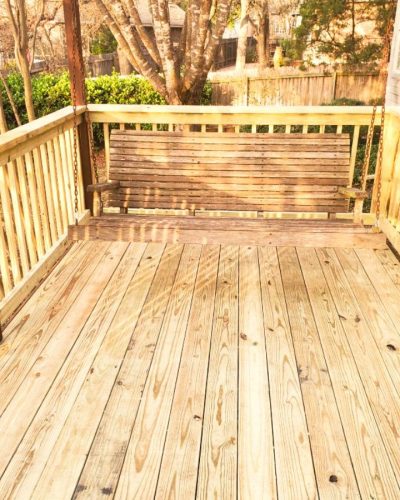
Material choices in East Austin lean heavily toward composite for the modern infill builds (Mueller, Govalle, Johnston Terrace) and toward natural wood for the older traditional homes (East Cesar Chavez, Chestnut, Holly). The architecture drives the material conversation more than personal preference: a 1940s shotgun home looks wrong with gray composite, and a 2018 modern infill looks wrong with cedar planks. We bring physical samples to the site walk, so the material lines up with the home rather than fighting it.
Rooftop deck work concentrates in East Austin because of the modern flat-roof architecture. We’ve built rooftop decks across Mueller, East Cesar Chavez, and Govalle on homes designed from the start to support roof loading. Design-led custom rooftop builds cover railing aesthetics, drainage routing, and access stair integration, all of which differ from ground-level deck work.
Lot sizes in East Austin are usually smaller than the suburban Travis County markets, which keeps the design conversation grounded. We rarely see the half-acre suburban lots that support multi-tier multi-zone builds. East Austin work tends toward single-level compact designs that pack a lot of function into a modest footprint, sometimes with tiered deck construction where grade drops on the south side of the property.
The permit timeline for East Austin deck work matches the rest of the City of Austin: 4 to 8 weeks for review, with no historic district overlay in most of the area. Mueller homes don’t carry city historic designation, but they do require homeowner association design review, which runs in parallel with the city permit and adds 2 to 4 weeks. We build a realistic timeline into the project schedule, so there are no surprises mid-build.
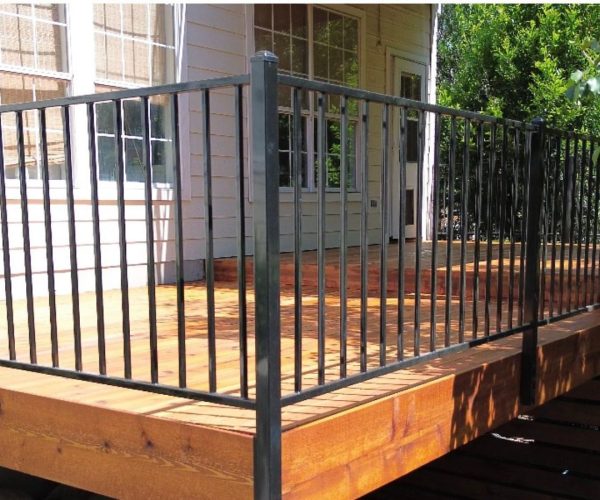
We also serve the adjacent inner-loop areas to the south, and East Austin clients sometimes have rental property or family homes elsewhere in the metro. We also handle work in South Austin and Hays County, and the same crew runs both kinds of projects. The conversation differs because the constraints do, but the build standards don’t.
Frequently Asked Questions — East Austin Deck Projects
Which East Austin ZIP codes do you cover?
We work across 78702 (East Cesar Chavez, Holly, Govalle), 78721 (Springdale corridor), 78722 (French Place), 78723 (Mueller and surrounding), 78724, and 78725 (further east). These are the inner-east and east-central neighborhoods where the mix of older homes and modern infill creates the highest demand for decks. Other adjacent ZIPs work on a case-by-case basis.
Do you build Mueller deck projects in accordance with the homeowner association rules?
Yes. We’ve completed deck projects across Mueller with homeowner association design review preceding the city permit. The Mueller standards govern elevations, material finishes, and the aesthetics of railings visible from public spaces. We’ll submit the design for review and make adjustments to secure approval the first time, since revision rounds add weeks to the timeline. The association approval runs in parallel with the city permit.
Are East Austin rooftop decks more common than ground-level builds?
On the modern infill builds, often yes. Most new-construction homes in Govalle, Johnston Terrace, and parts of Mueller carry flat or low-slope roofs designed from the start to support rooftop deck loading. We use pedestal-paver systems that protect the roof membrane and meet structural and drainage requirements. Older traditional East Austin homes still get standard ground-level deck work.
Can you work on East Austin townhome decks?
Yes, with some specific constraints. Townhome deck work differs from single-family work because the homeowner often doesn’t own the ground beneath the structure, and any attachment to the unit’s exterior must respect the builder’s warranty. We’ll coordinate with the builder or the association before committing to a design, since some structures can’t be modified without voiding the warranty.
How do you decide composite vs. natural wood for East Austin homes?
Architecture drives the choice more than personal preference. A 1940s shotgun home wears cedar well, and a 2018 modern infill build looks right with gray or charcoal composite. We bring physical samples to the site walk and hold them against the house’s existing trim and siding, so the deck reads as part of the home rather than tacked on. The decision usually becomes clear once the samples are in front of us.
What's the East Austin permit timeline for deck construction?
City of Austin permits take 4 to 8 weeks for review, which is the same as the rest of Travis County. Mueller homeowner association review adds 2 to 4 weeks running in parallel with the city permit. There’s no Local Historic District overlay across most of East Austin, so the timeline stays simpler than Central Austin’s historic neighborhoods. We’ll give a specific estimate after the site walk.
Do you handle new-construction deck work for Govalle and Johnston Terrace?
Yes, this is one of the most active areas of our East Austin work. The new modern infill buildings going up in Govalle and Johnston Terrace are often designed with the deck in mind from day one, which makes the build cleaner. We coordinate with the original builder on existing site documentation when possible, since this saves significant time on structural attachment and load planning.