
Most homeowners arrive at their first contractor conversation with a number already in their head. That number is almost always wrong, and not because they did anything foolish. It comes from a neighbor’s offhand comment, a home improvement forum post from several years ago, or a price-per-square-foot figure pulled from a national cost estimator that has no idea what lumber costs in Central Texas right now. The gap between that mental number and an accurate quote is where frustration lives. Understanding why that gap exists is the first step toward making a smart decision about your deck.
The Price-Per-Square-Foot Figure Does Not Tell the Whole Story
A $25-per-square-foot estimate sounds clean and simple. It is neither. That figure typically represents a basic pressure-treated pine deck on flat ground with no stairs, no railing upgrades, and no special site conditions. Change any one of those variables and the number moves significantly.
Material choice alone can triple the cost per square foot. Pressure-treated pine runs on the lower end, somewhere in the $15 to $25 per square foot range for materials only. Cedar sits higher, often $30 to $45 per square foot for materials, with a noticeably longer lifespan in the Texas heat. Composite decking from brands like Trex or TimberTech can push $50 to $80 per square foot for materials, but requires far less maintenance over time. Each of those choices involves a real trade-off between upfront cost and long-term cost, and a price-per-square-foot shorthand cannot capture that.
Site conditions matter just as much as materials. A deck built over sloped ground requires longer posts, more structural framing, and more labor hours than a deck built on level soil. Properties near Lake Austin, for example, often involve grade changes that add meaningful cost to any project. Soil type affects footing depth. Existing structures affect access. None of this shows up in a generic estimate.
Permits Are Not Optional, and They Are Not Free
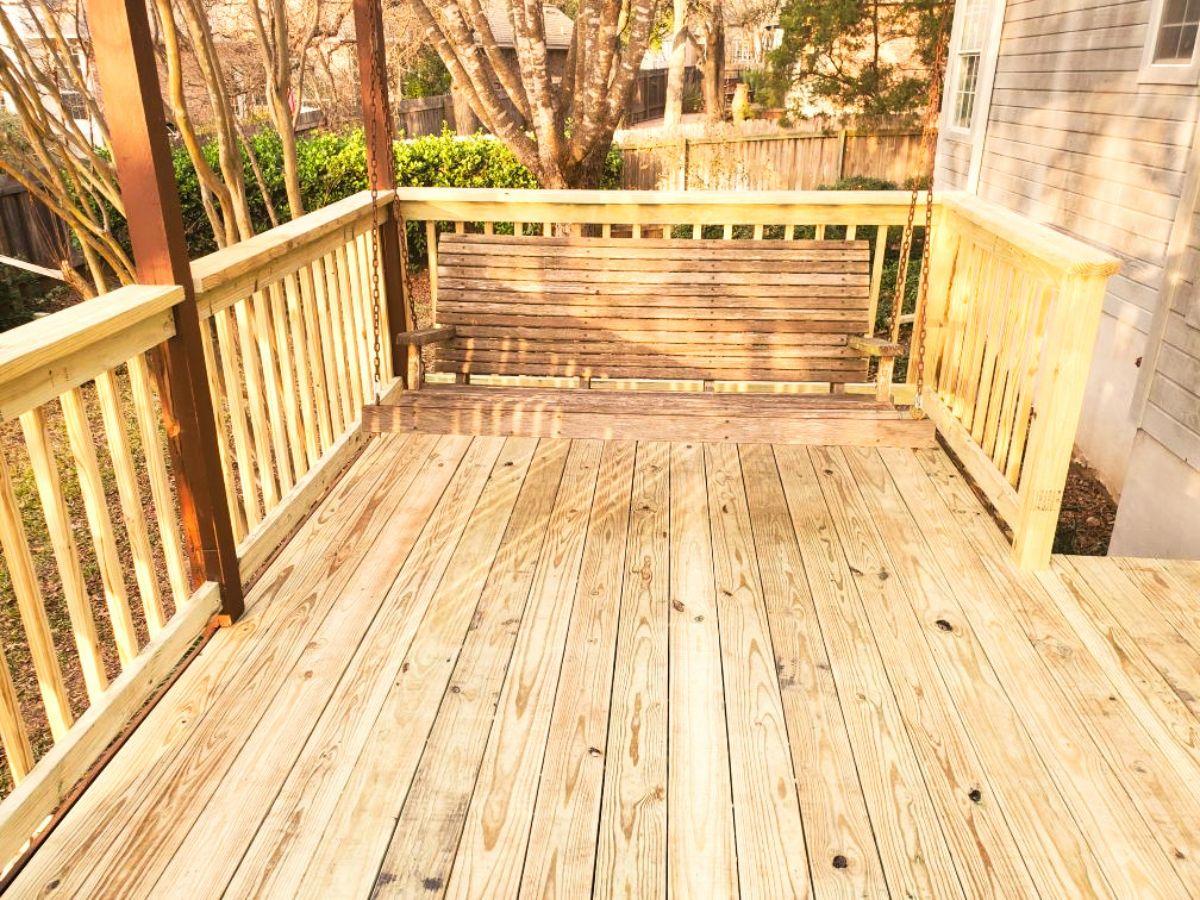
A surprising number of homeowners assume that a small deck, or one that sits close to the ground, does not require a permit. In Austin, TX, that assumption is almost always incorrect. The City of Austin requires permits for most decks, and the specific requirements depend on the deck’s height, square footage, and how it attaches to the house. Skipping the permit process is not a way to save money. It is a way to create a much larger problem at resale, when an unpermitted structure either has to be torn down or retroactively permitted at considerable expense.
Permit fees in Austin typically run between $200 and $800 depending on project scope, and the timeline for approval adds days or weeks to a project schedule. Any honest quote from a reputable contractor will include permit costs. If a quote leaves them out entirely, that is worth asking about directly. Majestic Deck Builders Austin includes permit coordination as part of every project, because skipping that step creates liability for everyone involved.
What Homeowners in Tarrytown Often Get Wrong About Timelines
Cost and time are connected in ways most customers do not expect. A job that gets rushed to save money on labor often costs more in the long run. Footings need time to cure before framing begins. Inspections have to be scheduled and passed before work continues. Material lead times, particularly for composite decking or specialty hardware, can run two to four weeks depending on supply.
Majestic Deck Builders Austin has found that homeowners in Tarrytown and surrounding areas frequently underestimate the planning phase. A well-built deck is not a two-week project from first call to final board. A realistic timeline from signed contract to finished structure runs four to eight weeks for most residential projects, accounting for permit approval, material delivery, and inspection hold points. Trying to compress that timeline usually means cutting corners somewhere, and those corners tend to show up later as structural problems or finish failures.
If you are comparing quotes and one contractor is promising a dramatically faster schedule than the others, ask specifically how they plan to handle the permit and inspection process. The answer tells you a great deal about how they work. You can also browse completed deck projects to get a realistic sense of what quality work looks like at different price points.
Maintenance Costs Are Part of the Real Price
The cheapest deck to build is not always the cheapest deck to own. Pressure-treated wood requires cleaning and sealing every one to two years in the Central Texas climate, where UV exposure and heat cycles are hard on unprotected wood. Over a ten-year period, those maintenance costs add up. Composite decking costs more upfront but needs little beyond occasional cleaning. Cedar falls somewhere in between, with good natural resistance to decay but still benefiting from periodic deck staining to preserve its appearance.
When a homeowner compares two quotes and picks the lower one without accounting for ongoing maintenance, they are not comparing the same thing. A contractor worth working with will walk you through the ten-year cost picture for each material option, not just the day-one price. That conversation is part of what separates a useful estimate from a number on a page. Homeowners in nearby areas like Allandale and Crestview face the same cost trade-offs, since the climate is identical and the material choices do not change by zip code.
Majestic Deck Builders Austin serves Tarrytown and the broader Austin, TX area and is a straightforward resource for homeowners who want accurate information before they commit to a project. Reach out at Austin, TX, (512) 900-5728.
Frequently Asked Questions
What factors can affect the cost of building my deck?
Cost can vary significantly based on material choice, site conditions, and design features. For example, pressure-treated pine is on the lower end, while composite materials can push costs much higher. Additionally, if your property has sloped ground or special access requirements, those factors will also increase labor and material costs.
Do I need a permit for my deck project?
Yes, in Austin, most decks require a permit regardless of size or height. Permit fees typically range from $200 to $800, and failing to obtain one can lead to significant issues at resale, including the potential need to tear down unpermitted structures.
How long should I expect the deck construction process to take?
A realistic timeline for completing a deck project usually ranges from four to eight weeks. This accounts for permit approval, material delivery, and necessary inspections, so any contractor promising a much faster completion should be questioned about their process.
What should I consider regarding ongoing maintenance costs?
When comparing deck options, consider the long-term maintenance costs, as they can significantly impact overall expenses. Pressure-treated wood requires frequent cleaning and sealing, while composite decking needs minimal upkeep, which can save you money over time.
Get Directions to Majestic Deck Builders Austin
🎧 Listen to this as a podcast
Also on Apple Podcasts, Spotify, and Amazon Music.