
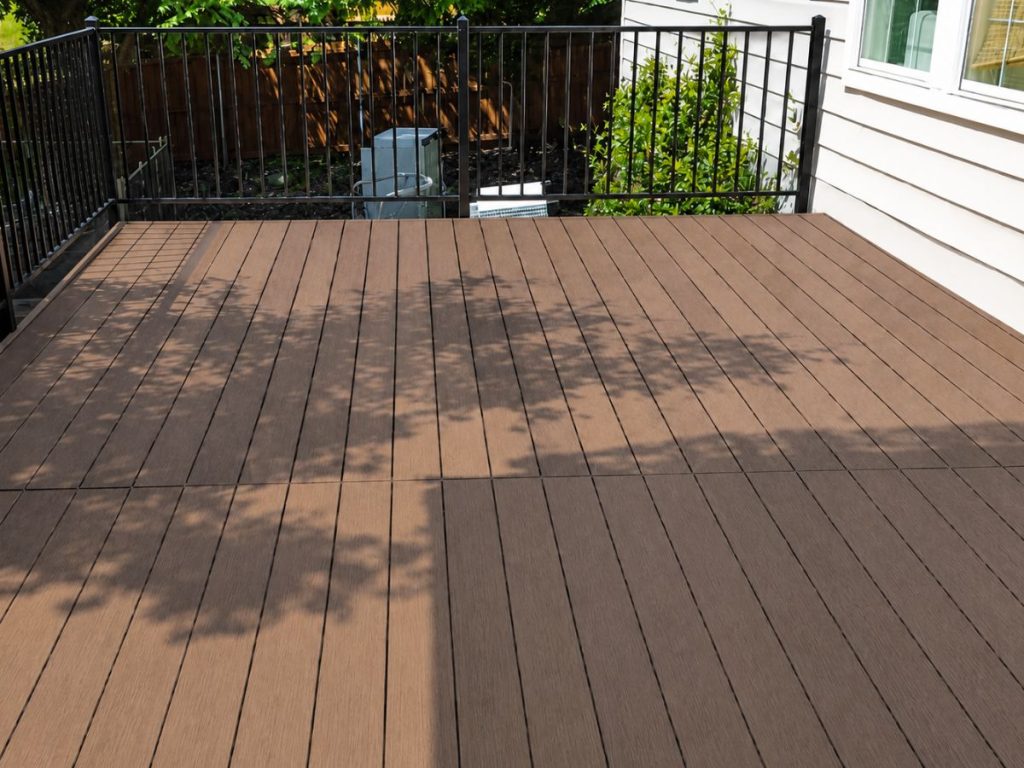
When Austin homeowners narrow down composite decking options, the conversation usually ends with two brands: Trex and TimberTech. We’re Trex Pro certified installers, and we work across both brands across Hays, Travis, and Williamson counties, with Trex running about three-quarters of our composite projects and TimberTech filling in the rest. Both perform well in Austin’s climate. There’s no losing choice here. The choice comes down to color preference, warranty priorities, and a few subtle performance differences. They’re not equally weighted for every homeowner, and they don’t all matter for every build.
This guide breaks down what each brand does well, where the warranty differences actually matter, how each handles Texas heat and UV, and how we’d help you decide at the site walk. If you’re earlier in the decision-making process and weighing composite against cedar, our broader material comparison addresses that question first. Robert and the Majestic crew walk through the brand decision with several homeowners each week.
The Quick Comparison
Trex makes three composite tiers: Transcend at the premium level, Select in the middle, and Enhance at the value end. Transcend’s what we install on most Austin projects. It uses wood-fiber-plus-polymer construction with a co-extruded protective cap that wraps the board on all four sides. The cap handles UV, stains, mold, and scratches. Trex’s color range runs wide at the premium tier, with sixteen options across cool grays, warm browns, and weathered cedar tones.
TimberTech runs three product lines too: PRO (composite, their premium), EDGE (composite, value), and AZEK (PVC at the top of the range). We install PRO for most Austin composite work and AZEK in areas with higher moisture exposure (pool decks, covered patios, low-elevation builds). TimberTech leans warmer in palette than Trex, with wood-tone finishes that read more authentically like natural cedar.
Upfront cost at the same product tier is close between the two brands. The differences worth weighing aren’t on the spec sheet alone.
Trex: Where It Does Well
Trex’s strongest case is consistency and brand depth. Sixteen color options at the Transcend tier give homeowners the widest available palette for matching trim, siding, and architectural character. The cool-tone grays sit cleanly next to modern infill homes and master-planned subdivisions. The warm-tone browns read closer to natural wood without the maintenance overhead.
Performance-wise, Trex handles Texas UV cleanly. Fade over twenty years is gradual rather than dramatic. The four-sided cap protects edges and end-cuts, which matters where boards meet stairs, transitions, or built-in features. We’ve installed Trex on multi-tier builds across Round Rock master-planned subdivisions, where the color match and edge cleanliness have driven the design.
Trex’s retail availability across Austin-area lumberyards is also a practical advantage. It’s not the headline reason to pick Trex, but it’s a real one. If a board gets damaged five years in and needs replacement, sourcing the same color and finish is easier than sourcing an equivalent TimberTech board. That’s not a small thing if you’re planning to live in the home long-term. That matters for long-term ownership, not for the initial build, but it’s worth knowing.
TimberTech: Where It Does Well
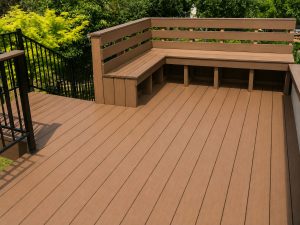
TimberTech’s strongest case is warm wood-tone aesthetics. The composite installation service covers either brand, depending on the project. Their premium composite and PVC lines run toward rich browns, weathered cedar tones, and aged-wood finishes that read more authentically like natural cedar than anything in Trex’s range. For traditional and craftsman homes where composite is the right answer on maintenance grounds but cedar tones suit the architecture, TimberTech usually wins the visual decision.
The warranty edge is real. TimberTech PRO carries a 30-year structural warranty, compared to Trex Transcend’s 25-year warranty. The fade and stain warranties run similarly (25 years for both brands), but the longer structural coverage matters if you’re staying in the home long-term or pricing the deck into a future sale.
For pool deck applications, we’d default to TimberTech AZEK rather than either of the composite lines. AZEK’s PVC construction handles standing water and chlorine exposure better than wood-fiber composite. Pool-edge construction typically runs AZEK regardless of which composite the homeowner preferred for the main deck.
TimberTech’s woodgrain embossing is also more pronounced than Trex’s, with a deeper texture that reads more like real wood up close. On covered patios or shaded decks where the texture is more visible, the difference is noticeable.
Color and Aesthetic Differences
Color preferences are subjective, but the brand palettes tend in different directions. Trex leans cooler overall. The most popular colors we install are grays, which pair well with modern architecture, contemporary trim, and lighter siding colors. Trex’s weathered cedar tones split the difference, working on both contemporary and transitional homes.
TimberTech leans warmer overall. Their most-installed colors run toward the rich browns and woodgrain tones. These show up most often on traditional and transitional homes where the deck needs to feel architecturally consistent with the house.
The other factor is grain texture. TimberTech’s woodgrain embossing is deeper and more variable, which reads more like natural wood up close. Side by side with actual Western Red Cedar, the difference is still obvious, but it’s the closest composite gets. Trex’s texture is subtler and more uniform across boards. Both look good, but in different ways. We bring physical samples of both to every site walk because the differences are obvious in person and abstract on a screen.
Warranty Comparison
Both brands offer industry-leading composite warranties, but the specific terms differ in ways that matter for some homeowners.
Trex Transcend carries a 25-year limited residential warranty against rot, decay, splintering, and warping, plus a 25-year fade-and-stain warranty on the surface board. Replacement coverage is limited to material at the manufacturer’s discretion, not labor.
TimberTech PRO carries a 30-year structural warranty, a 25-year fade and stain warranty, and adds limited labor coverage in years one through three. AZEK extends structural coverage further and adds specific moisture protection language for water-adjacent applications. The longer the structural coverage, the more meaningful the difference for homeowners staying long-term or pricing the deck into a future home sale.
For outdoor feature integration, including outdoor kitchens, fire pits, and built-in seating, both brands work, with TimberTech edging ahead on the cohesive warm-tone look across multiple elements. For either brand, warranty registration matters. Both require registration within 90 days of installation to keep coverage in force. We handle that step at project closeout, and the homeowner gets the registration confirmation in writing.
Heat Performance in Austin Sun
Surface temperature on a hot Austin afternoon matters more than most homeowners realize until they’re walking barefoot on the finished deck in August. Composite runs hotter than natural wood at the same color depth, and dark composite runs significantly hotter than light composite.
Trex and TimberTech perform similarly in terms of heat at equivalent colors. The difference between brands is small. The color difference is large. A charcoal or espresso composite in full sun can hit 150°F on a 100°F day. A light gray or weathered cedar tone runs closer to 125°F under the same conditions. Light colors stay walkable barefoot in the Austin summer. Dark colors usually don’t. Cedar Park’s modern subdivisions tend to run lighter color choices for exactly this reason.
We cover this trade-off in the color conversation at the site walk. If the deck’s covered or shaded most of the afternoon, dark colors work. If it’s in full west or south sun, we’d push toward lighter tones regardless of brand preference. The new build process accounts for lot exposure in the material recommendation, since shade structure and color choice interact directly.
How to Decide Between Them
The honest answer is that for most Austin builds, either brand works, and the decision comes down to color and warranty preference rather than a meaningful performance gap.
If you want the widest color palette, the strongest brand recognition, or the easiest material to source in the long term, Trex’s the answer. If you want the longest structural warranty, the warmer wood-tone aesthetic, or PVC performance for a pool deck (AZEK), TimberTech’s the answer.
We bring samples of both brands in your preferred color range to every site walk. Holding them against your home’s existing trim and siding usually clarifies the decision faster than any spec comparison. That’s the conversation we’d rather start with. Schedule a brand walkthrough, and we’ll cover the comparison with samples in hand. Past composite builds across both brands show finished results in context.