
Deck Replacement When Repairs No Longer Pay Off
Majestic replaces aging, failing decks throughout Austin and Hays County. Full tear-down, haul-away, and rebuild in composite or cedar, often on the existing footprint to save on permits. Honest repair vs. replace assessment first. Fully insured, 1,000+ projects since 2016.
When a deck has reached the end of its structural life, replacement is the honest answer. We replace decks throughout Austin and Hays County, handling the full teardown, haul-away, and rebuild as a single project. A deck with a failing ledger, rotted joists, and cupped surface boards isn’t worth chasing with piecemeal repairs, and we’ll tell you when you’ve crossed that line. The Majestic team is fully insured for demolition and new construction alike.
The replacement conversation starts with the same honest assessment we run for any project. If the structure can be saved, we’ll quote a deck repair instead, because replacement is a bigger investment and should only happen when the deck actually needs it. When the assessment confirms replacement is the right call, we move into design. Schedule a replacement assessment to start.
How Deck Replacement Works
Most replacements reuse the existing footprint, which matters for permitting and cost. When the new deck matches the original size and location, the City of Austin or Hays County permit process is simpler, and we avoid new setback or impervious-cover review. If you want to expand the footprint or change the configuration, that’s a custom design conversation, and we’ll cover the permit implications up front.
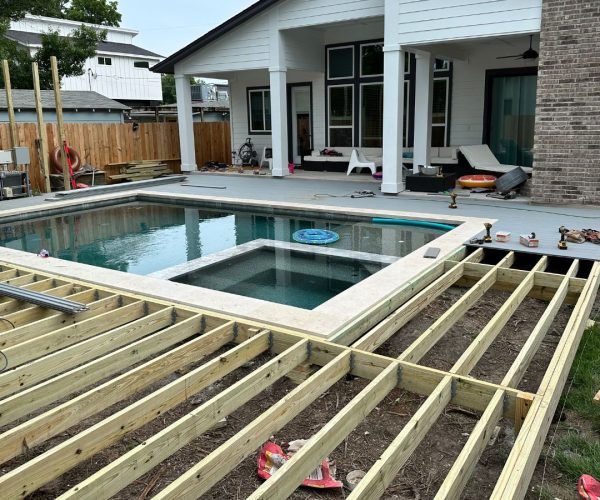
Tear-down is the first physical phase. We remove the old deck completely, including the surface, framing, posts, and footings where they’ve failed. We haul everything away, so you’re not left with a pile of treated lumber to dispose of, and we leave the site clean. If the existing footings are sound and properly placed, we may reuse them, saving time and costs during the rebuild. The assessment tells us which footings can stay and which ones have heaved or rotted past reuse. Every footing rarely survives on an older deck, but salvaging even half of them shortens the rebuild.
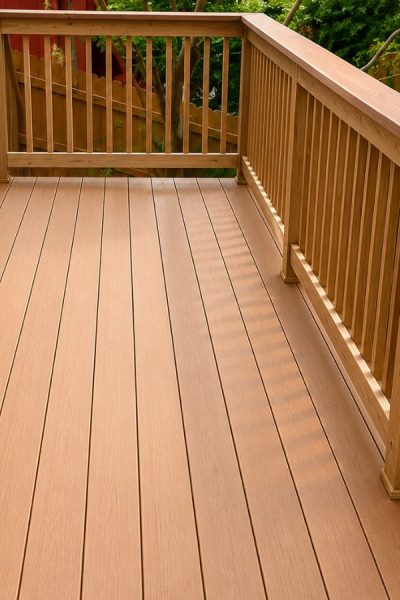
The rebuild is where the upgrade happens. A replacement deck is built to current code with modern hardware, proper flashing at the ledger, and a material upgrade from whatever failed the first time. Most replacement clients move from old pressure-treated or worn cedar to composite decking because the whole point of replacing is not to do it again in 15 years. Composite carries the longest service life of anything we install.
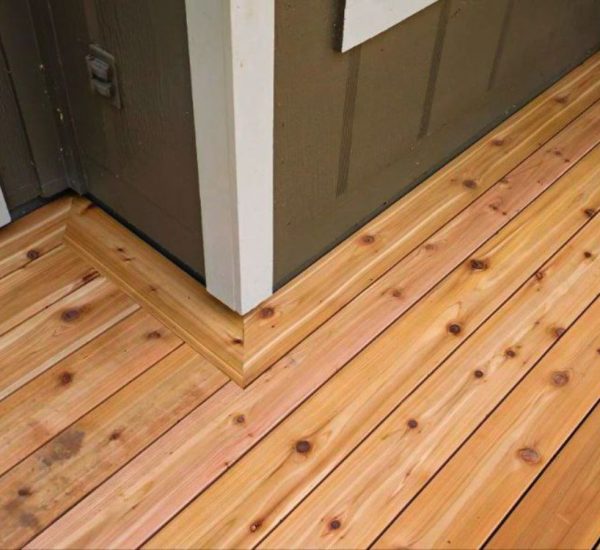
For clients who want to stay with wood, we rebuild in cedar with construction details that ensure cedar lasts: hidden fasteners, stainless-steel or hot-dip-galvanized hardware, and proper flashing. The original deck likely failed because of corners being cut on those details, not because cedar is a bad material. When built correctly, a cedar replacement outlasts the deck it replaces by a wide margin.
Replacement is also the moment to reconsider the design. If the old deck was a flat, single-level platform on a grade-drop lot, a multi-level configuration might use the space far more effectively. If there’s a pool the old deck ignored, a pool deck integration is worth discussing. We don’t push upsells, but replacement is the natural time to fix design mistakes the original builder made.
The replacement timeline runs longer than a repair but shorter than people expect. Tear-down and haul-away take 1 to 2 days. The rebuild runs 1 to 3 weeks, depending on size, material, and design complexity. Permit review adds 2 to 6 weeks up front, depending on the jurisdiction, with the City of Austin taking longer than Hays County. Our build standards lay out each phase and what to expect.
Deck Replacement Across the Austin Metro
We replace decks across the full Austin metro and Hays County, including South Austin and Driftwood. Older neighborhoods see the most replacement work because their original decks are now 20 to 40 years old and well past service life.
Homeowners in Buda and newer Hays County subdivisions request replacement less often because their decks are newer. Still, builder-grade decks on tract homes sometimes fail early enough to need replacement within a decade. We assess those the same way: structure first, honest verdict second.
The replacement quote is a single itemized number covering demolition, haul-away, materials, labor, permits, and any footing work. There are no surprise charges for disposal or for footings we discover need replacing, because the assessment catches those before the quote. Most homeowners find that a properly built replacement, amortized over its service life, costs less per year than the cycle of repairs they faced on the old deck. That’s the math we’ll walk you through at the assessment, so you’re not guessing about whether replacement pays off. We won’t push you toward rebuilding a deck that doesn’t need rebuilding.
Frequently Asked Questions
How do I know it's time to replace my deck rather than repair it?
The deciding factors are structural. A failing ledger connection, widespread joist or beam rot, settled or rotted posts, and more than 40 percent surface board failure together signal replacement. One or two of those alone may be repairable. We run a structural assessment first and give you the reasoning. If the deck can be saved economically, we quote a repair instead, since replacement should occur only when the deck genuinely needs it.
Do you handle the teardown and disposal of the old deck?
Yes. Replacement is a complete project: we remove the old surface, framing, posts, and failed footings, then haul everything away. You’re not left with a pile of treated lumber to dispose of yourself. If the existing footings are sound and properly placed, we may reuse them to save time and cost, and the assessment tells us which ones can stay.
Can the new deck reuse the old footprint to save on permits?
In most cases, yes. When the replacement matches the original size and location, the City of Austin or Hays County permit process is simpler and avoids new setback or impervious-cover review. If you want to expand the footprint or change the configuration, that becomes a custom design conversation, and we’ll cover the permit implications up front before you commit.
What material should I choose for a replacement deck?
Most replacement clients move to composite because the point of replacing is not to do it again in 15 years, and composite carries the longest service life we install. For those who prefer wood, we rebuild in cedar with construction details that ensure it lasts: hidden fasteners, stainless hardware, and proper flashing. The original deck likely failed because corners were cut on those details, not because of the material itself.
How long does a deck replacement take in Austin?
Tear-down and haul-away take 1 to 2 days. The rebuild runs 1 to 3 weeks, depending on size, material, and design complexity. Permit review adds 2 to 6 weeks up front, with the City of Austin moving more slowly than Hays County. Total project time from signed quote to finished deck typically runs 4 to 10 weeks, most of which is permit review rather than construction.
Should I change the deck design when I replace it?
Replacement is the natural time to fix design mistakes the original builder made. If the old deck was a flat platform on a grade-drop lot, a multi-level design might use the space far better. If there’s a pool the old deck overlooked, pool-deck integration is worth discussing. We don’t push upsells, but rebuilding from scratch is the best time to improve the design rather than replicate the original layout.